
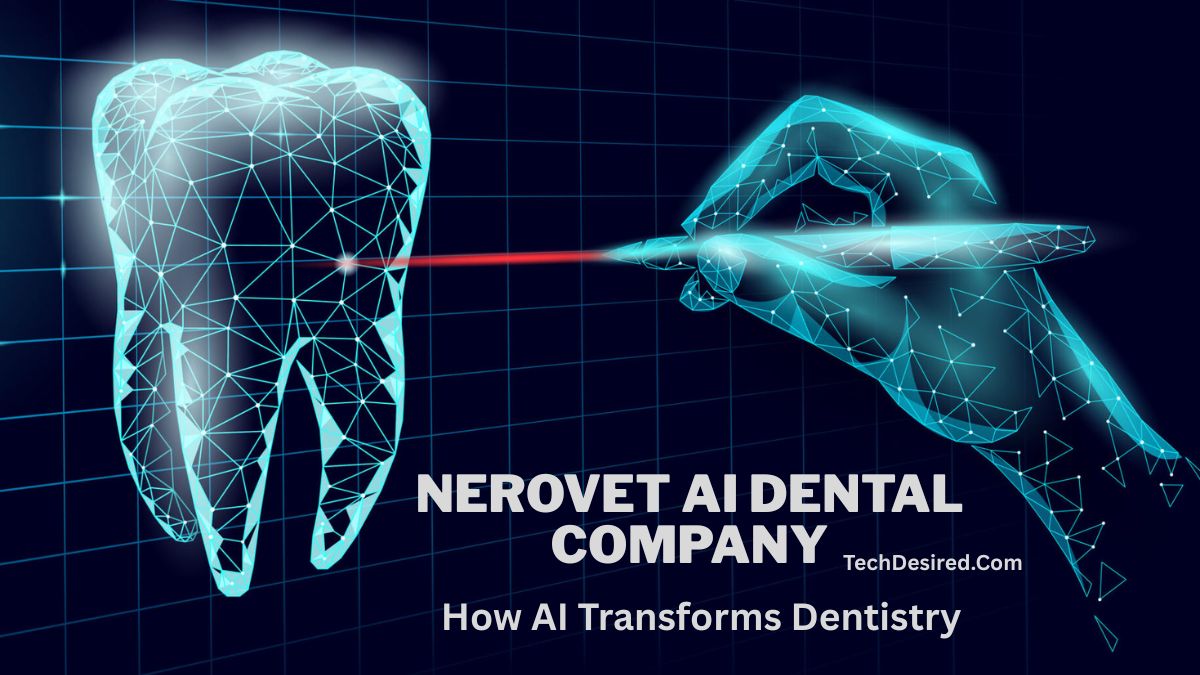
Let’s be honest—few phrases make people’s palms sweat quite like “you need a dental X-ray.” It’s not just the anticipation of potential news; it’s the inherent uncertainty. What is that faint shadow? Is it something to worry about, or just a tricky angle? For decades, dentistry has relied on the sharp eye and experience of the dentist, which, while skilled, is human. What if there was a second set of eyes, tireless and trained on millions of data points, to help find the answers? That’s exactly where the Nerovet AI Dental Company is making its mark, steering modern dentistry into a new era of precision, predictability, and patient empowerment.
This isn’t science fiction. It’s happening now in forward-thinking clinics. Artificial intelligence is moving from a buzzword to a fundamental tool, and companies like Nerovet AI are at the forefront, building the bridge between cutting-edge computer science and everyday dental care. So, what’s the real story behind this innovator, and how is its technology changing smiles for the better?
What Is Nerovet AI Dental Company?
In a nutshell, Nerovet AI is a health-tech company specializing in developing artificial intelligence software solutions specifically for dental diagnostics and clinical workflows. Think of them less as a manufacturer of drills or chairs, and more as the architects of the digital intelligence that makes those tools smarter.
Overview of Nerovet AI and its mission in dental innovation
Nerovet AI’s mission typically centers on a powerful idea: to augment the dentist’s expertise, not replace it. Their goal is to minimize diagnostic guesswork and maximize clinical accuracy. They aim to transform raw dental data—X-rays, scans, clinical notes—into clear, actionable insights. By doing so, they seek to create a new standard of care where early detection is the norm, treatment plans are highly personalized, and patients are active, informed participants in their oral health journey. It’s about building a future where dental issues are intercepted early, often before they become painful or expensive problems.
How Nerovet AI Uses Artificial Intelligence in Dentistry
The magic of Nerovet AI’s approach lies in its application of two core AI disciplines: computer vision and machine learning. Here’s how they translate into real-world dental applications.
AI-powered dental imaging and diagnostics
This is arguably their flagship application. Nerovet AI’s algorithms are trained on vast, anonymized datasets of dental images—panoramic X-rays, bitewings, CBCT scans—that have been labeled by panels of expert radiologists and dentists. The AI learns to recognize patterns with superhuman consistency.
- What it does: In seconds, the software can scan a new patient’s X-ray and flag potential areas of concern. It highlights the subtle outline of a cavity forming between teeth, circles the faint early signs of bone loss from periodontal disease, and points out the precise margins of a periapical lesion. It acts like a highlighter pen for the dentist’s attention.
Machine learning for treatment planning
Beyond just finding problems, the AI helps map out solutions. By analyzing historical data from thousands of similar cases and their outcomes, machine learning models can predict the likely progression of a condition and suggest optimal treatment pathways.
- What it does: For an orthodontic case, the AI might analyze a digital scan and predict tooth movement with different bracket placements or aligner strategies. For an implant case, it could suggest the ideal size, angle, and position based on the patient’s unique bone density and anatomy, reducing surgical risk.
Key Features and Technologies of Nerovet AI Dental Solutions
So, what does the actual toolbox look like? Nerovet AI likely packages its smarts into a few key technologies.
Automated dental X-ray analysis
This is the day-to-day workhorse. A dentist uploads a digital X-ray to a secure platform, and within moments, receives an annotated version. The report doesn’t just say “cavity”; it might note the probable depth (enamel vs. dentin), location, and even a confidence score for the finding. This turns a subjective interpretation into a more objective, documented analysis.
Predictive oral health insights
Leveraging longitudinal data (multiple X-rays over time), the AI can identify minute changes a human eye might miss. It can track the rate of bone loss over years or monitor the stability of a healing root canal, providing a powerful trend analysis that helps in preventive strategy.
Cloud-based dental AI platforms
Accessibility is key. Nerovet AI’s solutions are likely delivered via secure, HIPAA-compliant cloud platforms. This means a small, single-dentist practice can access the same powerful AI tools as a large hospital, without massive upfront investment in computing hardware. The software integrates with common dental practice management and imaging systems.
Benefits of Nerovet AI for Dentists and Dental Clinics
The adoption of this technology isn’t just about being “high-tech.” It delivers tangible, practice-changing benefits.
Improved diagnostic accuracy
Even the best dentists can have an off day or miss a subtle finding tucked in a complex anatomical area. The AI provides a consistent, secondary check. Studies on similar dental AI tools show significant improvements in the detection of early cavities, cracks, and bone abnormalities, reducing false negatives.
Time-saving workflows for dental professionals
Reading X-rays is time-consuming. An AI that pre-analyzes and highlights areas of interest allows the dentist to focus their expert judgment where it’s most needed. This can streamline consultations, speed up report generation for referrals, and improve overall clinic efficiency.
Enhanced patient trust and transparency
Walking a patient through their X-ray is transformed. Instead of pointing at a gray blur, the dentist can show a clear, AI-generated highlight: “See this area the AI has flagged? That’s the early decay we need to watch.” This visual, evidence-based communication builds tremendous trust and helps patients understand the why behind treatment recommendations.
How Nerovet AI Improves Patient Experience in Dental Care
The patient feels these benefits directly, often translating to less anxiety and better outcomes.
Faster diagnosis and reduced errors
Early detection means simpler, less invasive treatments. A tiny interproximal cavity caught early might need only preventive resin, not a larger filling later. This “catch it early” approach, powered by AI’s keen detection, saves patients from more complex procedures down the line.
Personalized treatment recommendations
The AI’s analysis contributes to a treatment plan that feels tailor-made. By considering the specific morphology of a lesion or the unique bone structure of a patient, the recommendations move from a standard protocol to a truly personalized roadmap.
Nerovet AI vs Traditional Dental Diagnostic Methods
How does this new school stack up against the old?
Accuracy comparison
Traditional methods rely solely on human visual interpretation. AI adds a data-driven layer. While a seasoned dentist is highly accurate, AI excels at consistency and processing vast amounts of visual data without fatigue. It’s the difference between a master watchmaker and a perfectly calibrated laser measuring tool—both are precise, but in different, complementary ways.
Cost and efficiency differences
Initially, there’s a subscription or licensing cost for AI software. However, this is often offset by the efficiency gains: more patients seen per day, reduced liability from missed diagnoses, and the ability to provide and bill for advanced diagnostic services. It shifts cost from pure labor to intelligent technology.
Use Cases of Nerovet AI in Modern Dental Practices
The applications span the entire field of dentistry.
General dentistry
For routine check-ups, AI is a powerful detection aid for caries, calculus, and early periodontal changes, making every exam more comprehensive.
Orthodontics
AI can assist in analyzing cephalometric X-rays for treatment planning, predicting treatment time, and even monitoring aligner progress by comparing sequential digital scans.
Oral surgery and preventive care
In implantology, AI aids in precise surgical guide design. For oral pathology, it can help screen for abnormal lesions. Its greatest power may lie in supercharging preventive care by identifying risks long before they become emergencies.
Is Nerovet AI Dental Company Safe and Reliable?
This is the paramount question for any health tech.
Data security and patient privacy
Reputable companies like Nerovet AI should use enterprise-grade, encrypted cloud storage with strict access controls. Patient data should be fully anonymized before being used for algorithm training. Compliance with regulations like HIPAA (in the US) or GDPR (in Europe) is non-negotiable.
Regulatory compliance and industry standards
Their diagnostic software likely falls under regulatory scrutiny as a medical device (e.g., needing FDA clearance or CE marking). This involves rigorous clinical validation to prove the software is safe and effective for its intended use—a key marker of reliability.
Who Should Use Nerovet AI Dental Technology?
Small dental clinics
They benefit by leveling the playing field, gaining access to specialist-level diagnostic tools without a specialist on payroll, enhancing their service offering and competitive edge.
Large dental hospitals and chains
For large groups, AI provides standardization of diagnostic quality across multiple locations, ensures consistent care protocols, and offers powerful data analytics on population oral health trends.
Future of AI in Dentistry and Nerovet AI’s Role
Emerging trends in dental AI
We’re moving toward integrated “clinical decision support systems” where AI analyzes all patient data—images, genetic info, microbiome data, lifestyle factors—to provide a holistic risk assessment and personalized prevention plan. AI for automated administrative tasks (insurance coding, note drafting) is also on the rise.
How Nerovet AI plans to evolve
To stay ahead, Nerovet AI will likely expand its algorithms to new image types (intraoral photos, 3D facial scans), integrate with more practice management software, and develop predictive models for long-term oral health outcomes, moving from diagnostics to true health forecasting.
Final Thoughts: Is Nerovet AI the Future of Dental Care?
The trajectory seems clear. While the compassionate, skilled hand of the dentist will never be replaced, the tools at their disposal are undergoing a revolution. Nerovet AI Dental Company represents a significant part of that shift—from intuition-based to data-informed practice.
Is it the entire future? No. The future is a hybrid model: the irreplaceable human touch, clinical experience, and patient rapport of the dentist, powerfully augmented by the objective, data-driven insights of AI. In this partnership, dentists become even more effective, patients become more empowered, and the standard of care rises for everyone. The goal isn’t a robot doing dentistry; it’s ensuring every dentist has the best possible intelligence to support their work. And that’s a future worth smiling about.
FAQs About Nerovet AI Dental Company
Q: Does the AI make the final diagnosis?
A: No. The AI is an assistive tool. The final diagnosis and treatment decision always remain the responsibility of the licensed dentist. The AI provides evidence and suggestions.
Q: Is it expensive for clinics to implement?
A: Given its typical cloud-based model, it usually involves a subscription fee rather than a large capital expense, making it accessible. The ROI comes from efficiency and improved care.
Q: Can it be wrong?
A: Yes. AI models have false positives and false negatives. That’s why the dentist’s expertise is crucial to interpret the AI’s findings in the full clinical context of the patient.
Key Takeaways:
- Nerovet AI provides diagnostic AI software that acts as a consistent, tireless second opinion for dentists.
- Its core benefits are improved early detection, workflow efficiency, and enhanced patient communication.
- The technology is a tool for dentists, not a replacement, with the clinician always making the final call.
- It has applications across general dentistry, orthodontics, and surgery, making advanced diagnostics accessible to clinics of all sizes.
- Safety and reliability are grounded in medical device regulations, data encryption, and rigorous clinical validation.